


Kernel Issue 6: FEED is out now, reaching you through one of the myriad feeds coursing through our modern technological society. One of my goals when putting together this issue was to expose the genealogy of those feeds, the history behind what often fades into the infrastructural background. Tomás Guarna is a scholar of digital infrastructure and governance from a social perspective. Here, he traces the history of the now-omnipresent infinite feed, showing the particular decisions and decision-makers that informed its development.
Also, if you’re in New York: we’re throwing a launch party for Kernel 6 at Hex House in Brooklyn on November 8! We’ll be featuring readings from the issue as well as a behind-the-scenes look at the making of the magazine from Kernel Magazine Creative Director Connie Liu! We hope to see you there! Get your tickets now!
—Jacob Sujin Kuppermann

🌽 A Media History of the Infinite Feed 🔩

By Tomás Guarna
Edited by Jacob Sujin Kuppermann
In 2023, a young woman known as “K.G.M.” sued Meta and YouTube for designing features that made her allegedly addicted to the platforms starting when she was just six years old. This addiction, she argued, ultimately left her with anxiety, depression, body dysmorphia, and suicidal thoughts. In March of this year, the tech companies were found guilty by a jury in Los Angeles — with damages at $4.2 million and $1.8 million respectively for Meta and YouTube — after agreeing that they acted with malice and fraud. Many of the culprits of Meta and YouTube’s psychologically destructive strategies are well-known by now: algorithmic recommendations, auto-played videos, constant notifications, and beauty filters. But interestingly, K.G.M.’s lawyers also included among these tools “infinite scroll,” the design feature of Web and mobile apps that presents content seamlessly as users scroll down through content in their feeds.
“Doomscrolling,” “mind-rotting,” “technology addiction” — the endless feed has become the emblematic medium of contemporary digital pathology, the tool of choice for the passive Internet user who scrolls and scrolls in the search of a hit of dopamine. Interestingly, however, this immediacy in receiving consumable Web content was not always demonized — in fact, it was once seen as the harbinger of a celebrated mode of networked politics. Pundits and scholars attributed the rapidness of online activity and the ever-updating feed as a key conduit to progressive political winds, from Obama’s 2008 win to the 2010s Arab Spring. But above all, the story of the infinite feed shows how the design of platforms gradually disconnected the flow of information consumption from conscious choice — a transition that left the dreams of early Web enthusiasts behind, and opened the doors for surveillance capitalism.
Unsurprisingly, the Internet was not always organized around endless feeds. Prior to the rise of dynamic page updates (how clients automatically retrieve new information from the server), to see updated information, users would have to take part in the archaic practice called refreshing, where they would press a button with two arrows forming a circular loop, similar to a recycling symbol. The icon has since been largely refashioned as a single arrow, the concept of a client-server communication now completely abstracted. Refreshing today is almost a misnomer: rather than receiving the freshest version of a website’s content, the refresh button on browsers today is generally used to reattempt a query, retrieving the latest version of a website’s code, or re-launching the website — usually, when we suspect it is malfunctioning. Revisiting the earlier meaning of refreshing brings us back to a Web with a different temporality, one where users would “take turns” with servers, and where online experiences were temporally scattered and broadly slower.

Creating seamless online experiences became a priority for dot-com entrepreneurs of the mid-1990s as they discovered that the gold mine of the Internet was in monetizing interactivity, not access. Selling access to the Internet infrastructure had become a viable business when the U.S. government privatized the Internet in 1995. However, it allowed only a few players and required massive investments. Tech capitalists soon discovered that the prime business opportunity was in profiting people’s online interactions — whether by selling them access to a service, like Match.com; by taking a cut of their sales, like eBay; or delivering them ads, like Google. For this goal they would need to design online experiences that were frictionless.
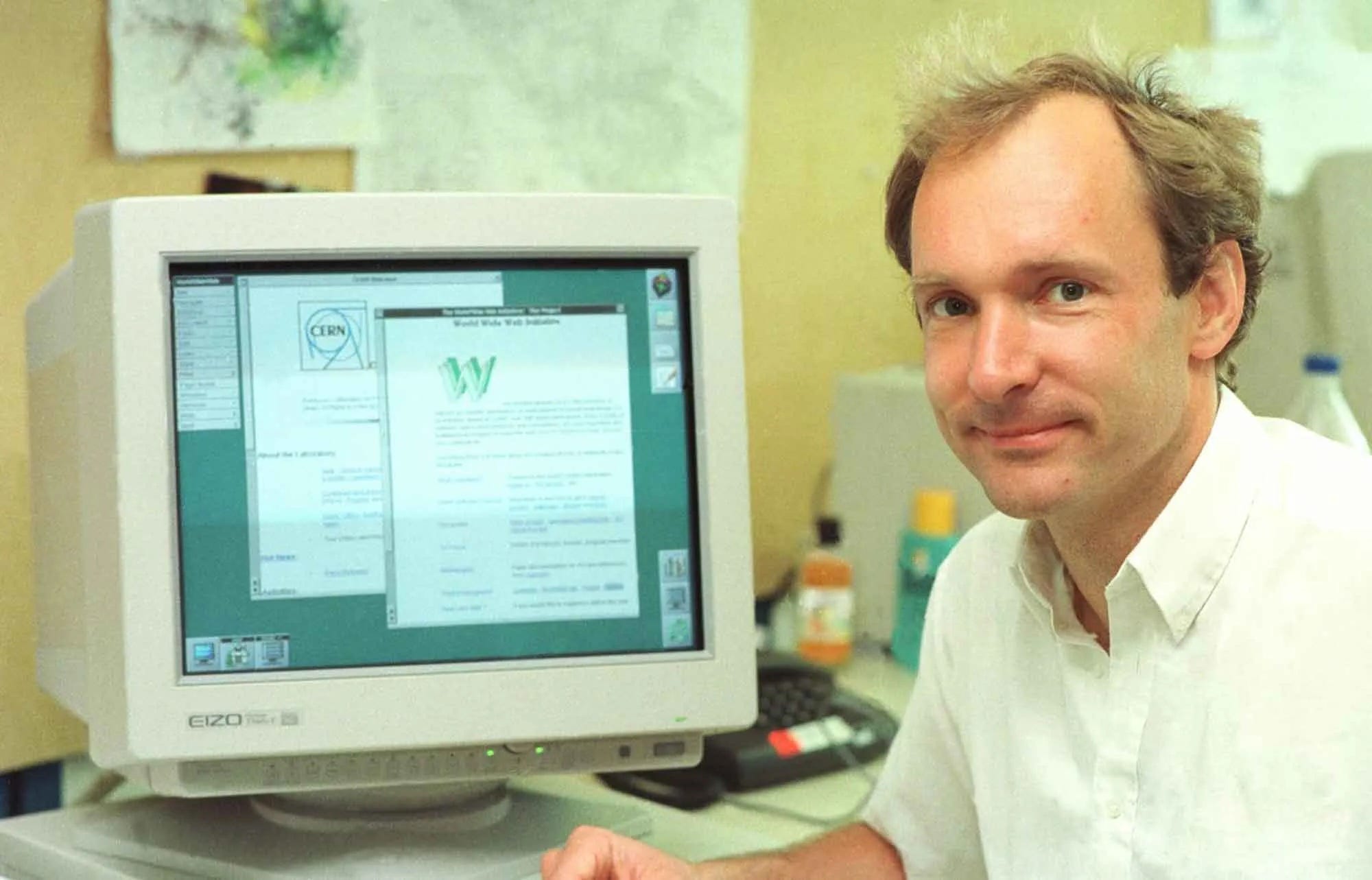
One foundation for these Web experiences was HTTP, the Hypertext Transfer Protocol. Invented by Tim Berners-Lee and his colleagues at CERN in the early 1990s, it defined the syntax and semantics for accessing distributed files on the Web. Thanks to HTTP, you can access a file on a server in China from a computer in Argentina, since both computers communicate following the same rules and language. Particularly, HTTP was envisioned as a “librarian” for digital files on the Web — hypertext documents with graphics, text, videos, and, importantly, links that allowed users to go from one document to another. These documents were coded in HTML, the HyperText Markup Language. Developers could tweak the documents to deliver custom information to users based on their requests — for example, showing a user’s specific dating matches, or their search results based on a query. Another important characteristic of HTTP was that it was “stateless” — the server treated each request from the client as independent, and “forgot” what it had communicated with it before. Other protocols that facilitated real-time Web interaction — like the IRC protocol, used for online chatrooms — had persistent connections. This meant that HTTP could “serve” a higher number of simultaneous users, as the server did not need an ongoing process for each user. Served through HTTP, developers could also flexibly design HTML interfaces that allowed for various purposes, from dating to bidding. In turn, protocols were limited to their envisioned purposes — IRC for chatting, SMTP for emailing etc.
Driven to profit from the Web’s booming popularity, dot-com entrepreneurs enlisted Web developers to create seamless Web experiences they could profit from — ideally, ones that would not require users to refresh. On March 3, 1995, a user with an Italian email address wrote in “www-talk,” the public mailing list and technical discussion forum for the World Wide Web Consortium (“W3C”), which decides the open standards for the Web, “As everybody of us know, html is a ‘monodirectional’ protocol […] I (pronunciation: ‘my boss’) would like to investigate how the thing could be changed, in order to have a real ‘live’ environment.” The user proposed three options: a background process in which the client would poll the server periodically; integrating server functionalities in the browser; or starting a server in the browser that would communicate with the actual server. W3C leadership were not interested. A response from Dan Connolly, a computer scientist who chaired the W3C HTML Working Group, is emblematic of W3C’s refusal to support a “live” web: “Wedging this into HTTP seems like a bad idea. HTTP is an information retrieval protocol. For conferencing, look at protocols like IRC or the MUD [multi-user dungeons] stuff.” HTTP was for information retrieval, not for web interactivity. The open standards community could not be bothered with attempts to fit the Web into the mold of online monetizable interactions.
Outside of W3C’s public standards discussions, Netscape — the Web browser company founded by Jim Clark and former Mosaic developer Marc Andreessen — was independently developing their own solution. As described in an article by ACM columnist Hal Berghel, Netscape had popularized “push technology” in 1995 by developing two methods of “dynamic page updating” — that is, updating content without client refreshing. One was a “server push” method through special software. It did not require client requests, but the server had to hold a persistent, running process for each connected client, which, at its core, clashed with how HTTP was designed. The second method was “client pull,” where an HTML meta tag (code with instructions for the browser, invisible to the user) would instruct the web browser to refresh every X amount of seconds.
Netscape’s client pull, however, had two key problems. For one, it would reload the entire website, which was cumbersome, especially with slow Internet speeds. And second, Web developers could not rely on Netscape’s client pull because it was not a widely-shared standard, but an idiosyncratic feature particular to the Netscape browser, since W3C refused to incorporate it. The client pull method involved an “http-equiv” tag, which was controversial because they simulated a response from the server itself. As Apache Web server early developer Brian Behlendorf termed it, client pull was ultimately a hack (“though Netscape likes to call them ‘cool tricks’”, he noted).
The holy grail of dynamic page updates would also emerge against the open standards’ community resistance, but from Microsoft — a company in a much more advantageous position. In 1999, Microsoft released a version of ActiveX (a software framework that would allow small programs to be run directly inside Internet Explorer) that included a JavaScript object (a reusable block of code) called “XMLHTTP;” the identifiers were ActiveXObject(”Msxml2.XMLHTTP”) and ActiveXObject(”Microsoft.XMLHTTP”). A JavaScript script could use the XMLHTTP obejcts to fetch new data from the server, and then use the response to update just part of the existing page without refreshing the entire site. XMLHTTP powered Microsoft’s Outlook web client, making it work similarly to its desktop version. Microsoft’s success in popularizing XMLHTTP through a browser extension may be puzzling today, but it is worth noting that Internet Explorer’s market dominance was reaching 75.31% in August 1999; and that plug-ins to enable Web functionalities were fairly popular despite the vulnerabilities they provoked. Possibly until Steve Jobs’ declared opposition to Flash in 2010, downloading an extension to enable a feature on the Web was fairly popular, as were spyware infections from a culture that did not mind downloading games, tools, purple gorilla virtual assistants.

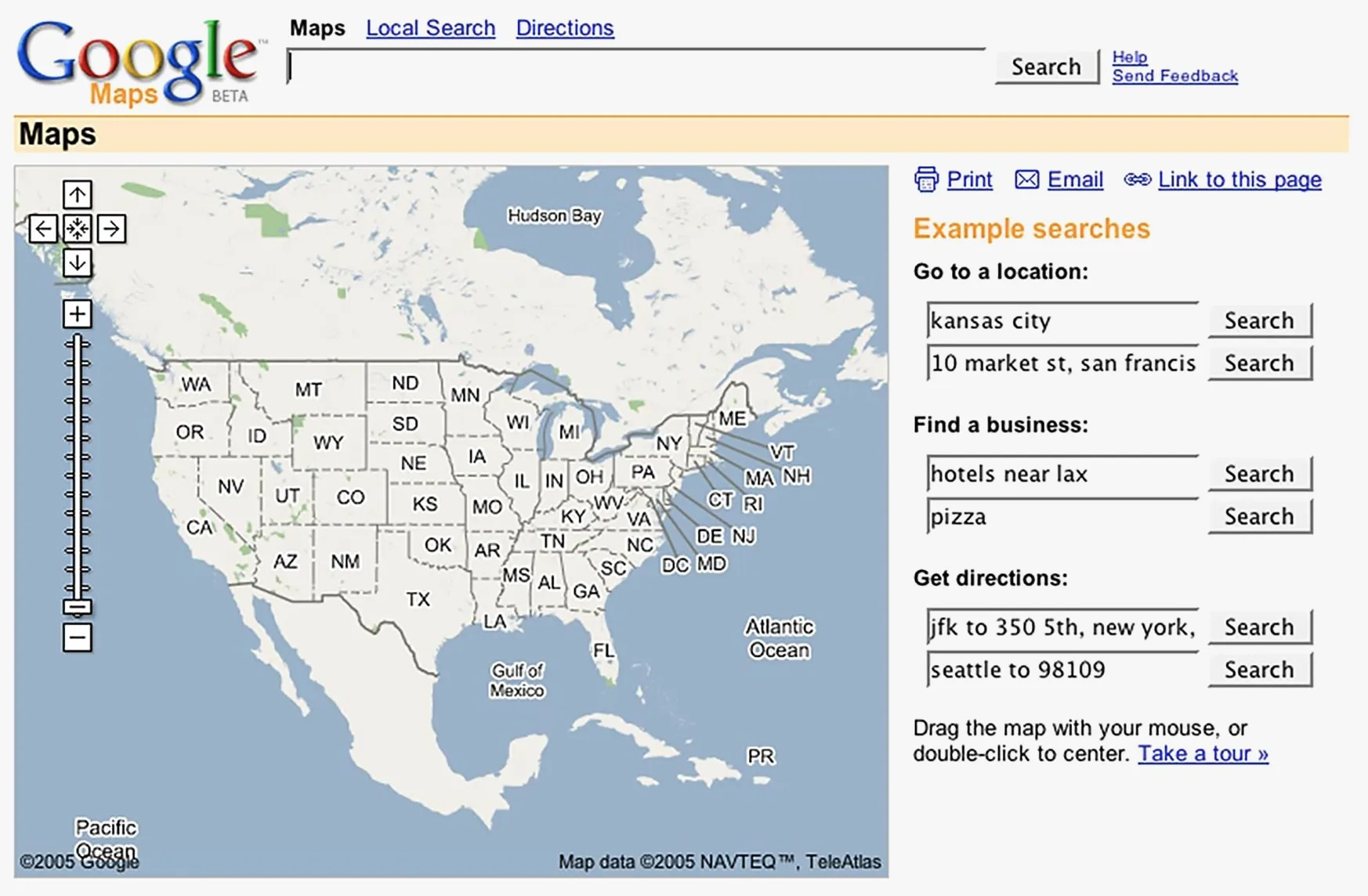
As Microsoft’s solution to dynamic page updates grew in popularity, competitor Web browsers adopted it under the non-Microsoft identifier of XMLHttpRequest, which soon became a de facto standard — even if W3C did not begin to adopt it as such until 2006. Gecko, Mozilla’s browser engine — used in Firefox and other Mozilla products, built from the open-sourced Netscape codebase — introduced and coined XMLHttpRequest in 2000. Apple’s Safari browser adopted it in 2004, and Opera in 2005. Microsoft’s Internet Explorer adopted its alternate name in 2006. Popular web applications relying on XMLHttpRequest, or “XHR,” as it came to be termed by Web developers, allowed users to interact with the Web in ways that felt similar to desktop software: accessing information in real time, without clunky reloads. While smooth interactivity has previously been a domain of software that had to be downloaded, developers could now effectively create “Web apps.” XHR’s popularization crystallized the transition of the Web as a “network of documents” to a network of applications that could rely on ever-updating online information. Google’s Web applications, targeted to the mass public, were notable examples of this: Google Maps allowed users to zoom in and zoom out, to move seamlessly through online maps updated with fresh information, much of it crowdsourced from user contribution. Inspired by this new wave of Web apps, a popular 2005 essay by UX designer Jesse James Garrett coined the term “AJAX,” Asynchronous JavaScript and XML, to define a “new approach to Web applications” that finally eliminated ”the start-stop-start-stop nature of interaction”. While still requiring users to click, automatic refreshing had almost arrived.
The rising social networking sites of Web 2.0 embraced AJAX with open arms. In 2008, Twitter introduced an AJAX functionality so that users could access the latest tweets without refreshing the website. A year later, Twitter changed the prompt that users saw as an initiation to share tweets: “what are you doing?” became “what’s happening?” AJAX allowed Twitter to be a site about immediacy — a true Internet of the present. This was the culmination of a process that had begun in 2006, when Twitter launched with a reverse-chronological timeline with tweets from a user’s friends (later changed to followed users). It was envisioned so that users could see what their contacts — especially professional ones, as the site was celebrated for its relevance in conferences like SXSW — were doing at any time, thanks to Twitter’s early adoption of mobile apps and SMS posting. In Twitter: a Biography (NYU Press, 2020), communication scholars Jean Burgess and Nancy K. Baym talk about a tension between two visions: this early idea of Twitter as a social technology for updating your friends, and the one of an informational public communication platform. Twitter’s increase in speed and synchronicity, enabled via AJAX, allowed the site to embrace this second meaning — not just a social media site, but a true information network that could show users “what’s happening,” right now.


This transformation coincided with a moment when those social networking sites’ political potential seemed most promising. Concurrent with Twitter’s AJAX adoption, the first “Twitter revolutions” took place around the world. In 2009, protests in Moldova rose against the governing party, which had allegedly rigged the recent parliamentary election. Pundits named the Moldovan upheavals “Twitter revolutions,” with news media heightening the role of social networking sites as central to organizing civic action. That same year, protests broke out in major cities across Iran, in opposition to the incumbent president declaring victory in the 2009 election — also lauded by Western media as a “Twitter revolution” due to the alleged wide use of social media to organize and document events. The actual role of Twitter in these protests is debatable, in retrospect — notably, in a Dissent magazine piece, critic Evgeny Morozov convincingly argued that Twitter’s role in Iran was overstated, as the protests been largely organized by opposition candidate Mir-Hossein Mousavi’s political organization. There were also few active Twitter accounts in Tehran — although Morozov conceded that Moldova’s protests had been spontaneous, and Twitter may have had a role in encouraging them. In 2010, the Arab Spring broke with protests in Tunisia, followed by Egypt, Libya, and Yemen, among others — Western media, once again, lauded Twitter as the new medium of political change.
The same year the Arab Spring revolts started, the platform introduced a key change in its interface: the “infinite scroll.” Twitter’s first AJAX redesign had allowed users to click a button to load more tweets after they reached the end of their page. This offered more updated content without refreshing, but still required an action from the user. Twitter’s 2010 redesign of the service’s Web version — codenamed Phoenix, internally, and launched as #newTwitter — loaded new tweets automatically when users reached the end of the page. While the original ideation of an infinite-scroll feature was not from Twitter — it can be traced back to engineer Aza Raskin in 2006 — it was Twitter’s implementation which made infinite scroll become a convention across the Internet, since web developers rushed to mimic it across different sites. The infinite scroll invited users to read Twitter as a seamless text of the present. It materialized Twitter’s dream of an information network, where users would continuously access more and more updated information without breaks and disruptions. Users no longer had to request more information, they simply had to desire it. It translated into the platform’s design a vision of a citizenship that naturally strived for openness and the democratic flow of information.
Infinite scroll was a fundamental technical innovation behind today’s “For You pages,” or customized algorithmic feeds. As infinite scroll became implemented across all the major social networks, it allowed platforms to react to the information they gathered from users in real time. Building on its earlier EdgeRank system, in 2013 Facebook transitioned to a machine learning recommendation algorithm that used “over a thousand different factors” to sort posts in the platform’s News Feed, based on users’ predicted engagement. Infinite scroll meant that Facebook could deliver recent posts in small continuous batches — they would appear for users naturally, as long as they had a continuous Internet connection, maximizing engagement and minimizing conscious choice to load more content. But furthermore, delivering content piecemeal meant that Facebook’s recommendation engine could react to rapidly-updated data about posts’ global performance on the social network — the likelihood of all of Facebook’s user’s engagement with the post — but also to rapidly-updated data about the likelihood of the particular user’s engagement, based on real-time “likes”, “comments,” and “shares” of the posts they saw, possibly from the just-delivered batch.
The infinite scroll-powered feed opened the door for the rise of a sharp critique of Big Tech’s capture of people’s emotional states. In 2019, Harvard Business School professor Shoshana Zuboff would publish The Age of Surveillance Capitalism (Profile, 2019), which argued that platforms close tracking of people’s activity allowed to extract “behavioral surplus,” data that could be turned into “prediction products” and marketed to advertisers, insurers, and political campaigns interested in shaping people’s future behaviors. The infinite feed was a key medium for this task — it allowed platforms to collect “fresh” data about users, allowing ad systems to react instantaneously. But furthermore, these ads were delivered not just based on users’ demographic characteristics — for example, whether one is a 31 year-old graduate student in the Bay Area — but also on data that purportedly represented their psychological states, their behaviors and attitudes to immediately preceding content — whether they are hopeful, sad, or lonely. The infinite feed enabled surveillance capitalism’s move from demography to behavioral prediction, and it became the center of controversies around emotional influence like the Cambridge Analytica scandal.
Tomás Guarna is a PhD candidate in Communication at Stanford University.
Jacob Sujin Kuppermann is a PhD student in Ecology at UC Davis and the editor-in-chief of Kernel Magazine.
Thanks for reading — if you enjoyed this essay, we’d really appreciate it if you shared or forwarded to a friend!
